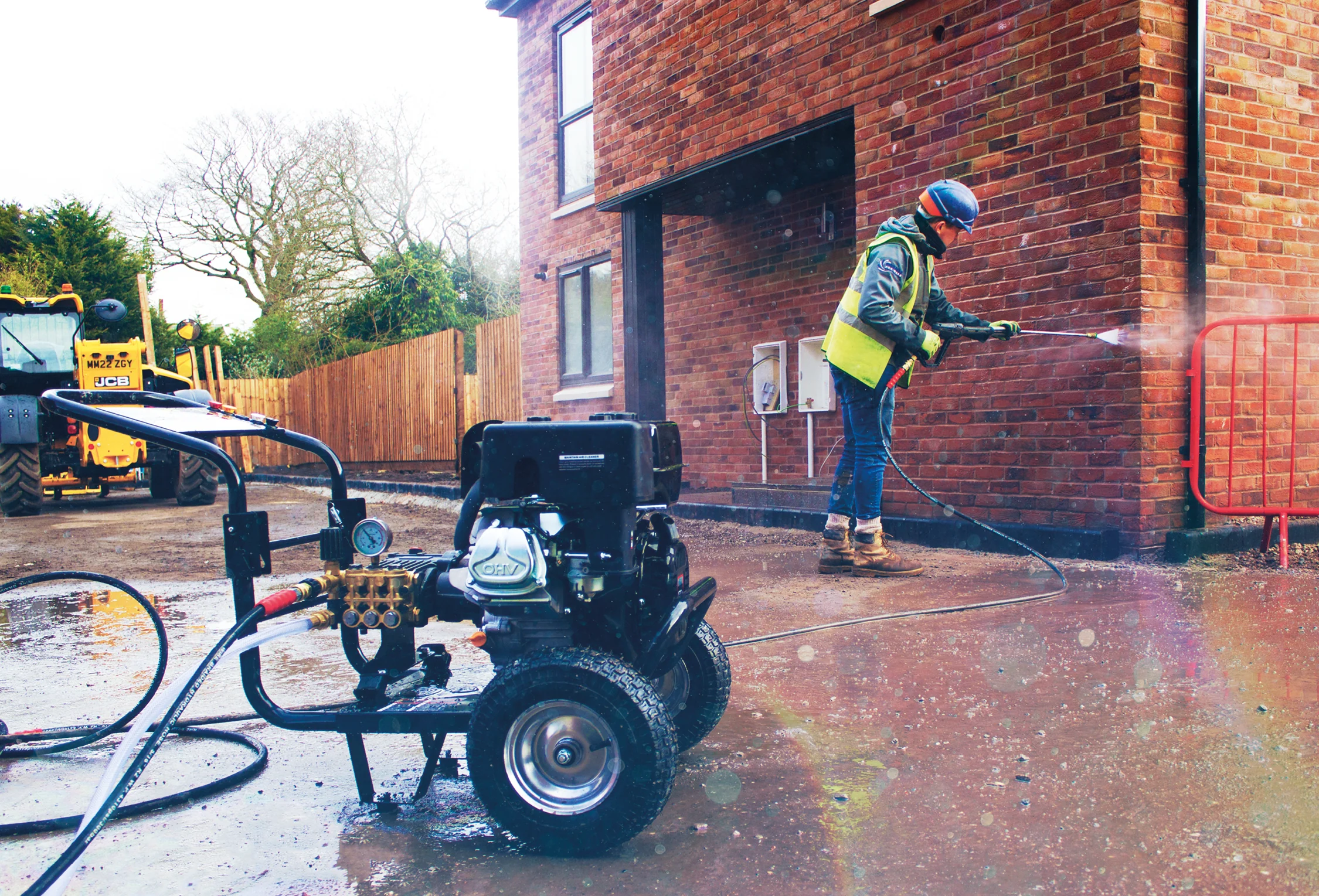
Your driveway is the “welcome mat” of your home. However, over a long winter or a humid summer, that pristine concrete can quickly become a canvas for oil stains, mildew, and stubborn tire marks. When it comes to restoring that curb appeal, homeowners in 2026 are faced with a classic dilemma: Electric Power Washer vs. Gas Pressure Washer.
At Camo Pressure Washing we know that the right tool makes the difference between a sparkling finish and a damaged surface. In this exhaustive guide, we’ll break down the technical specs, the cleaning power, and the hidden risks of each, so you can decide if you’re ready for a DIY weekend or if it’s time to call in the pros.
The Quick Verdict: Which One Wins for Driveways?
For most driveways, a Gas Pressure Washer is the superior choice. Gas units typically produce 2,800 to 4,000 PSI, which is necessary to strip away deep-set oil stains and organic growth from porous concrete. While Electric Power Washers (usually 1,500 to 2,300 PSI) are excellent for light cleaning like patio furniture or vehicles, they often lack the “stripping power” required for a professional-grade driveway restoration.
Understanding the Metrics: PSI vs. GPM
Before choosing a machine, you must understand the two numbers that define cleaning performance: PSI (Pounds per Square Inch) and GPM (Gallons per Minute).
- PSI (Pressure): Think of this as the “punch” that breaks the bond between the dirt and the driveway.
- GPM (Flow): This is the “rinse” factor. The higher the GPM, the faster you can wash away the debris you’ve just loosened.
In 2026, professional units used by companies like Camo Pressure Washing Services prioritize GPM. A high-pressure electric unit might have 2,000 PSI, but if it only has 1.2 GPM, cleaning a two-car driveway will take you the entire day.
Electric Power Washers: The DIY Favorite
Electric models have surged in popularity in 2026 due to their ease of use and low maintenance.
The Pros:
- Quiet Operation: Unlike gas engines, electric motors hum quietly, making them neighborhood-friendly.
- No Exhaust: You can safely use them inside a garage with the door open.
- Low Maintenance: No oil changes or gas mixing required. Just plug and play.
The Cons for Driveways:
- The “Lawnmower” Speed: Because they have lower GPM, you have to move the nozzle very slowly.
- Cord Limitations: You are tethered to an outlet. Using an improper extension cord can actually burn out the motor and create a fire hazard, as noted by the Electrical Safety Foundation International.
- Weak on Stains: Electric units struggle with “orange” iron stains or deep black mold that has lived in the concrete pores for years.
Gas Pressure Washers: The Heavy Hitters
If you want the “like new” look for your driveway, gas is the industry standard.
Why They Rule the Driveway:
- Power: Gas engines provide the torque needed to run high-pressure pumps that can reach 4,000 PSI.
- Mobility: No cords mean you can move freely from the curb to the garage without hunting for an outlet.
- Attachment Compatibility: Gas units can run Surface Cleaners (the spinning circular tools) much more effectively than electric ones.
The Downside:
- Noise: They are loud and require hearing protection.
- Maintenance: They require stabilized fuel, oil changes, and spark plug maintenance.
- Risk of Damage: In the wrong hands, 3,500 PSI can etch lines into concrete or strip the cream coat off your driveway permanently.
The Hidden Risk: Concrete Etching and DIY Mistakes
Many homeowners think, “The more pressure, the better.” This is a dangerous misconception. Concrete might feel like rock, but it is actually a porous, layered material.
If you hold a high-pressure nozzle too close to the surface especially with a gas unit you can “etch” the concrete. This creates permanent “tiger stripes” that cannot be removed. At Camo Pressure Washing we use variable-pressure nozzles and specialized “Soft Wash” techniques where necessary to ensure your driveway is cleaned, not carved.
2026 Efficiency Standards: Environmental Impact
In 2026, environmental regulations have tightened regarding “wash water runoff.” When you pressure wash a driveway, the water often carries oil, salt, and chemicals into the storm drains.
- Electric: Generally uses less water per minute, but requires more time.
- Professional Gas: While they use more water per minute, they finish the job 4x faster, often resulting in less total water waste.
The Environmental Protection Agency (EPA) encourages homeowners to be mindful of where their runoff goes. Professional services often use reclamation or filtration methods to stay compliant with local 2026 codes.
Why “Surface Cleaners” Are the Secret Weapon
If you are using a standard wand (the long stick) to clean your driveway, you are doing it the hard way. Professional gas-powered setups utilize Surface Cleaners. These are round attachments with rotating nozzles inside.
- Consistency: They provide an even clean without “striping.”
- Speed: They cover a 20-inch path in one pass.
- Safety: The nozzles are kept at a fixed distance from the concrete, preventing accidental etching.
Most residential electric washers do not have enough GPM to spin a professional-grade surface cleaner effectively. This is a primary reason why DIY driveway cleaning often looks “patchy.”
Advanced Surface Science & 2026 Property Care
In 2026, professional exterior cleaning has moved beyond just “hitting it with water.” Modern driveway restoration is a balance of physics and Chemistry.
Electric Washers & Detergent Limits: Most electric units feature a small onboard soap tank. While convenient, these tanks are designed for mild, consumer-grade soaps that only tackle surface-level dust.
Professional Grade Surfactants: At Camo Pressure Washing we utilize a process called “Downstreaming” or “X-Jetting” to apply industrial-strength surfactants. These chemicals penetrate the porous layers of the concrete to kill mold spores at the root.
The Benefit: By using the right chemistry, we can lower the PSI (pressure), ensuring your concrete is cleaned deeply without the risk of surface damage or “cream coat” stripping.
2026 Driveway Trends: Pavers vs. Poured Concrete
The material of your driveway dictates the equipment you should use. Using a Gas unit on a delicate surface, or an Electric unit on a rugged one, can lead to disaster.
- Stamped and Colored Concrete: High-pressure gas washers can accidentally strip the sealant or the dye from stamped concrete. This often requires a “Soft Wash” approach.
- Interlocking Pavers: These depend on “Polymeric Sand” in the joints for stability. An amateur with a gas-powered wand can easily blast this sand out, causing the pavers to shift and sink.
- Aggregate Concrete: This rugged surface can handle the raw power of gas units, which is necessary to get between the small stones that make up the texture.
The “Striping” Nightmare: A DIY Disaster
Search engines in 2026 are flooded with queries like “How to fix zebra stripes on my driveway.“ This is the hallmark of an amateur DIY job.
- Why it happens: Standard pressure washing wands deliver an uneven stream. If your hand shakes or you change your distance from the ground by even an inch, you create permanent “tiger stripes” in the concrete.
- How Professionals Avoid It: We use Rotating Surface Cleaners. These tools maintain a fixed distance from the ground and provide 360-degree coverage, ensuring a “uniform” finish that a handheld electric wand simply cannot replicate.
The True Cost of DIY: Is It Really Saving You Money?
Let’s look at the “Hidden Math” of DIY pressure washing in 2026:
- Equipment Investment: A high-quality gas unit, professional hoses, and a surface cleaner attachment can cost between $800 and $1,200.
- Maintenance Costs: Fuel stabilizers, oil changes, and pump winterization fluids are recurring costs.
- The “Time” Tax: A standard two-car driveway takes a homeowner 6–8 hours with an electric unit. Professional teams finish the same job in under an hour.
When you factor in the cost of equipment and the value of your weekend, a professional service from Camo Pressure Washing is often the more economical choice over a 5-year period.
Safety First: The 2026 Warning
Electric power washers are often viewed as “toys,” but even at 2,000 PSI, they are capable of serious injury.
- Injection Injuries: Pressure washers can drive water deep into human tissue, causing infections that are difficult to treat.
- Gas Exhaust Risks: Operating a gas unit in an enclosed garage can lead to Carbon Monoxide poisoning.
- Property Protection: Our team follows OSHA Safety Standards to ensure your pets, plants, and family remain safe during the cleaning process.
2026 Sustainability: Eco-Friendly Cleaning
Homeowners today are more environmentally conscious than ever.
- Water Conservation: Professional gas units finish the job faster, often using less total water than an electric unit that has to run for hours.
- Biodegradable Solutions: We use eco-friendly cleaning agents that break down naturally, ensuring your lawn and flower beds remain healthy. Refer to the EPA’s Best Practices for more on runoff safety.
Frequently Asked Questions
Q: Can I use an electric power washer on my concrete driveway? A: Yes, but it will take significantly longer, and it may not remove deep oil or rust stains. It is best for light “rinsing.”
Q: Will a gas pressure washer damage my asphalt? A: It can. Asphalt is softer than concrete. High pressure can strip the binder (the “glue”) from the rocks. For asphalt, we recommend a lower PSI or a chemical treatment.
Q: Is it cheaper to DIY or hire Camo Pressure Washing? A: When you factor in the cost of the machine ($300-$600), fuel, chemicals, and your own time (an entire Saturday), professional cleaning is often the more economical and stress-free choice.
Conclusion: Choosing the Right Stream
The battle between Electric Power Washer vs. Gas Pressure Washer for driveways comes down to one thing: The value of your time and your property. If you have a small, lightly soiled area and a free afternoon, an electric unit is a great tool. However, for those looking for a “New Construction” look without the risk of damaging their concrete, a gas-powered professional service is unbeatable.
Don’t let a dirty driveway drag down your home’s value. Experience the difference that professional grade equipment and 2026 cleaning technology can make.